

What Is Tile Adhesive? Complete Guide for Wall & Floor Tiling
Tile adhesive plays a critical role in modern wall and floor tiling systems. Whether you are a DIY homeowner, professional installer, or construction buyer, understanding what tile adhesive is—and how to choose the right one—directly affects installation quality, durability, and long-term performance.
This complete guide explains what tile adhesive is, how it works, common types, where it’s used, and why advanced reactive resin adhesives are becoming the preferred solution for demanding tile installations.
What Is Tile Adhesive?
Tile adhesive is a bonding material used to fix ceramic tiles, porcelain tiles, stone, and large-format slabs onto surfaces such as walls and floors. Unlike traditional cement mortar, tile adhesive is engineered to deliver strong adhesion, flexibility, and long-lasting performance.
Tile adhesives are designed to:
Create a firm bond between tile and substrate
Absorb movement caused by temperature changes
Prevent hollowing, cracking, or tile detachment
Improve installation efficiency and consistency

How Does Tile Adhesive Work?
Tile adhesive works by forming a strong mechanical and chemical bond between the tile and the substrate. Once applied, it fills surface irregularities, maximizes contact area, and locks tiles in place after curing.
High-performance adhesives also incorporate elastic properties, allowing them to adapt to:
Thermal expansion and contraction
Structural vibration
Large tile size and low water absorption materials
This flexibility is especially important for modern architectural designs using large-format porcelain slabs, marble, granite, and vitrified tiles.

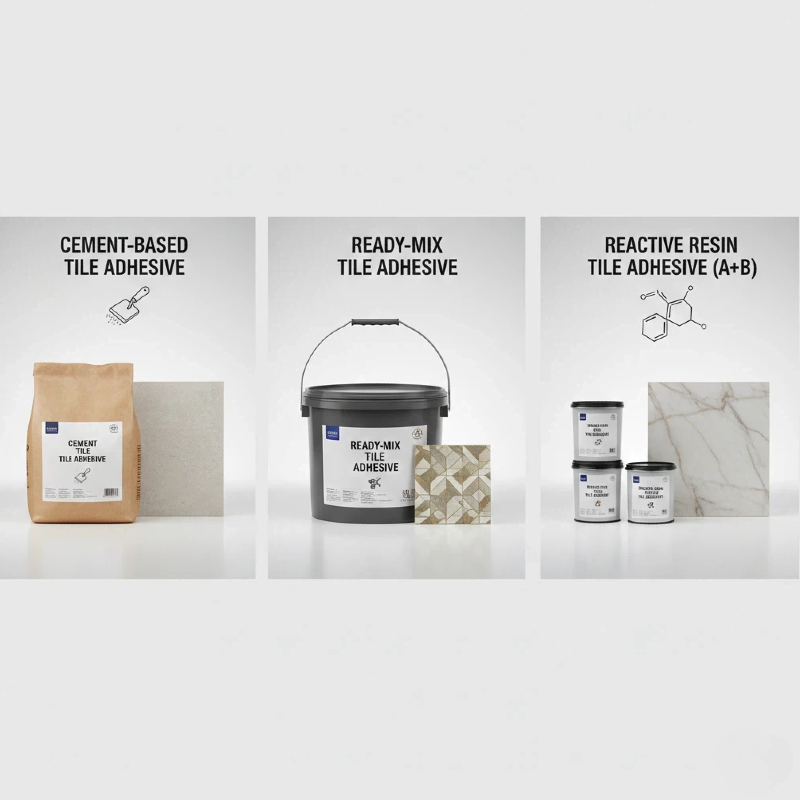
Common Types of Tile Adhesive
1. Cement-Based Tile Adhesive
Traditional and cost-effective
Suitable for standard ceramic tiles
Limited flexibility
Less effective for large tiles or low-absorption materials
2. Ready-Mix Tile Adhesive
Easy to use
Suitable for light wall applications
Not ideal for heavy tiles or floors
3. Reactive Resin Tile Adhesive (Advanced Solution)
Two-component system (Part A + Part B)
Exceptional bonding strength
High flexibility and crack resistance
Ideal for large slabs, stone, and demanding environments
Why Flexibility Matters in Wall & Floor Tiling
Rigid adhesives often fail when tiles expand or contract due to temperature changes. This leads to:
Tile hollowing
Surface cracking
Tile detachment over time
Advanced flexible adhesives incorporate an elastic coefficient, allowing them to absorb movement without losing adhesion. This makes them particularly suitable for:
Large vitrified tiles
Rock slabs
Marble and granite
Areas exposed to temperature fluctuation

Tile Adhesive for Large Format & Low Absorption Tiles
Modern tiles are larger, denser, and less absorbent than ever before. Traditional adhesives struggle to bond effectively with these materials.
A polyaspartic polyurea–based tile adhesive offers:
Superior wetting on low-absorption surfaces
Strong interface bonding force
Long-term durability under stress
This technology effectively solves common installation issues such as cracking, hollowing, and tiles falling off walls or floors.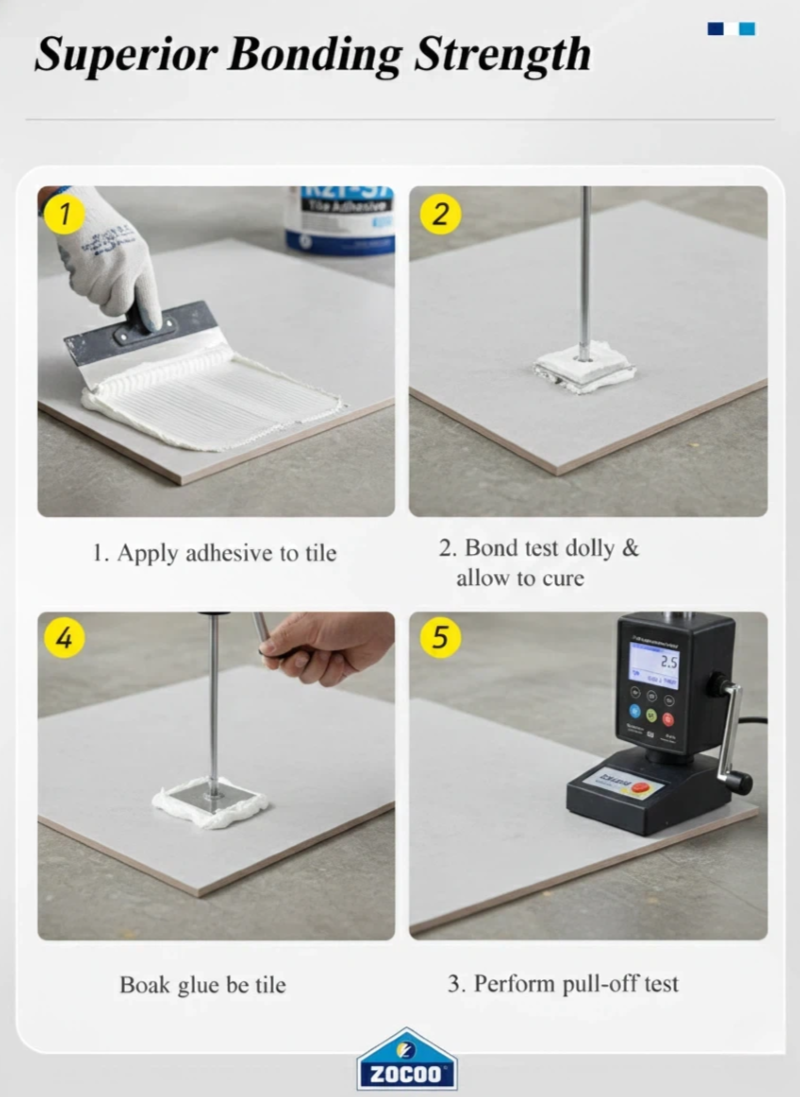
Environmental Considerations: Eco-Friendly Tile Adhesive
Environmental performance is becoming a key factor in material selection. Modern reactive resin adhesives can be:
Non-formaldehyde
Low odor
Solvent-free
Safer for indoor environments
Advanced emulsification technology allows these products to deliver high performance while meeting environmental and safety standards.

Key Advantages of Advanced Reactive Resin Tile Adhesives
Compared to traditional solutions, next-generation tile adhesives offer:
Reactive resin bonding technology
Excellent adhesion for long-term durability
High flexibility and crack resistance
Efficient application, ideal for big slabs
Strong resistance to tile hollowing and detachment
Innovative, environmentally friendly formulation
These features make them suitable for both residential and commercial projects.
Where Can Tile Adhesive Be Used?
Tile adhesive is widely used in:
Wall and floor ceramic tile installation
Porcelain tile systems
Stone and marble applications
Large-format slab installations
Interior and exterior construction projects
Choosing the right adhesive ensures stable, durable results across all applications.
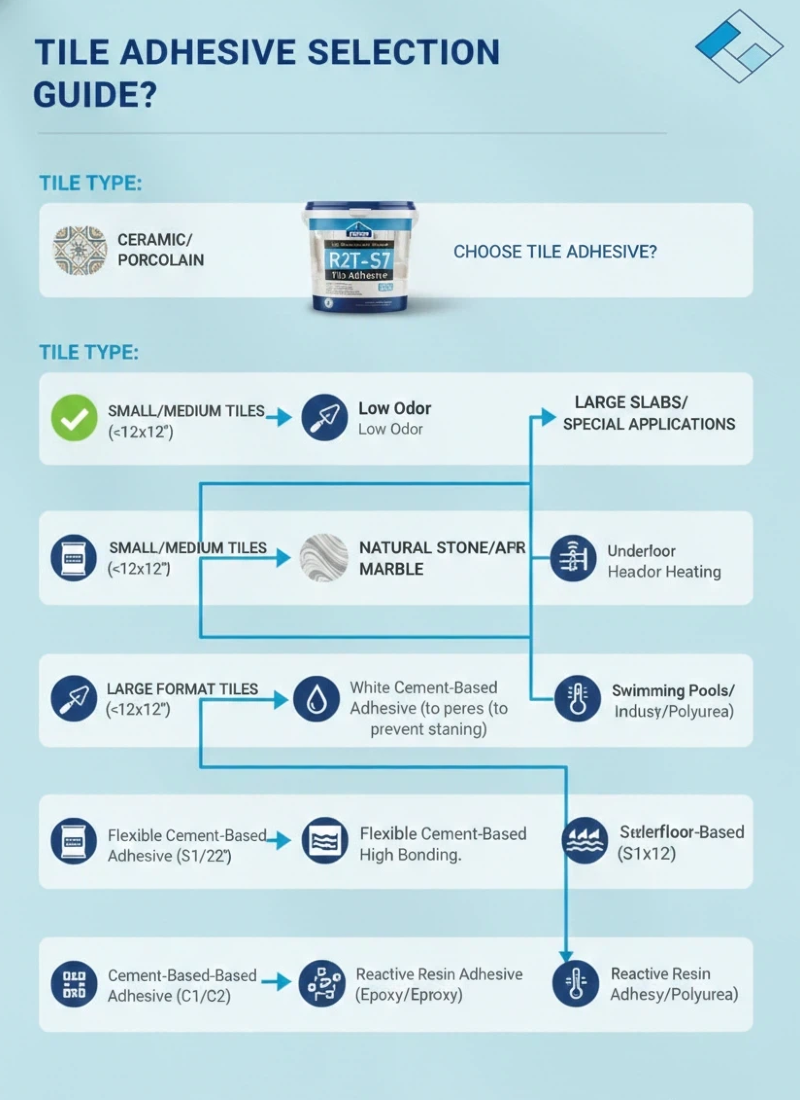
How to Choose the Right Tile Adhesive
When selecting a tile adhesive, consider:
Tile size and weight
Tile material and water absorption rate
Wall or floor application
Environmental exposure
Required flexibility and durability
For demanding applications involving large tiles, stone, or low-absorption materials, a flexible, reactive resin tile adhesive is often the most reliable solution.
Final Thoughts
Tile adhesive is far more than just a bonding material—it is a critical component that determines the success and lifespan of a tiling system. As tile technology evolves, adhesive solutions must evolve as well.
Advanced flexible, environmentally friendly reactive resin adhesives represent the future of wall and floor tiling, offering superior strength, adaptability, and durability for modern construction needs.


